
Dreamscape Guide
Dream Tokens and Dream Gems Explained
Dream Tokens and Dream Gems make selected progress visible across Dreamscape. They are virtual in-platform rewards that connect learning to upgrades, choices and the wider economy.
Rewards in Dreamscape are meant to do more than make a results screen look exciting. They create continuity. A learner can complete work in one part of the platform and use what was earned somewhere else.
Dreamscape currently uses two main reward currencies: Dream Tokens (DT) and Dream Gems (DG). They serve different roles, but both are virtual rewards inside Dreamscape rather than real-world money.
What are Dream Tokens?
Dream Tokens are the everyday virtual currency of Dreamscape. They can be earned through eligible learning and activity, then used across experiences such as upgrades, purchases and later financial decisions.
The key idea is that DT are limited. Once a learner has a balance, every use of those Tokens competes with another possible use. That creates the beginnings of budgeting and opportunity cost without requiring real money.
How are Dream Tokens earned from Learning Missions?
The current Learning Mission reward structure gives more Dream Tokens for stronger performance:
Rewards are only one part of the result. The mission still records the academic performance itself, which can contribute evidence to progress and NOVA+.
What are Dream Gems?
Dream Gems are a more specialised reward. For eligible Learning Missions, a learner can receive 1 DG for completion, awarded once for that quiz rather than repeatedly farming the same completion.
Keeping DG distinct from DT allows Dreamscape to reserve some purchases or unlocks for a rarer form of progress without making every part of the economy depend on one balance.
They are virtual Dreamscape rewards used inside the platform. Their purpose is progression, choice and learning — not to imitate a real bank balance or assign a real-world price to a child's schoolwork.
What can Dream Tokens be used for?
DT can connect to persistent parts of Nova such as unlocking or improving experiences, furnishing spaces and upgrading the Skyforge rover. In Milo, DT also become the working currency for more explicit financial choices.
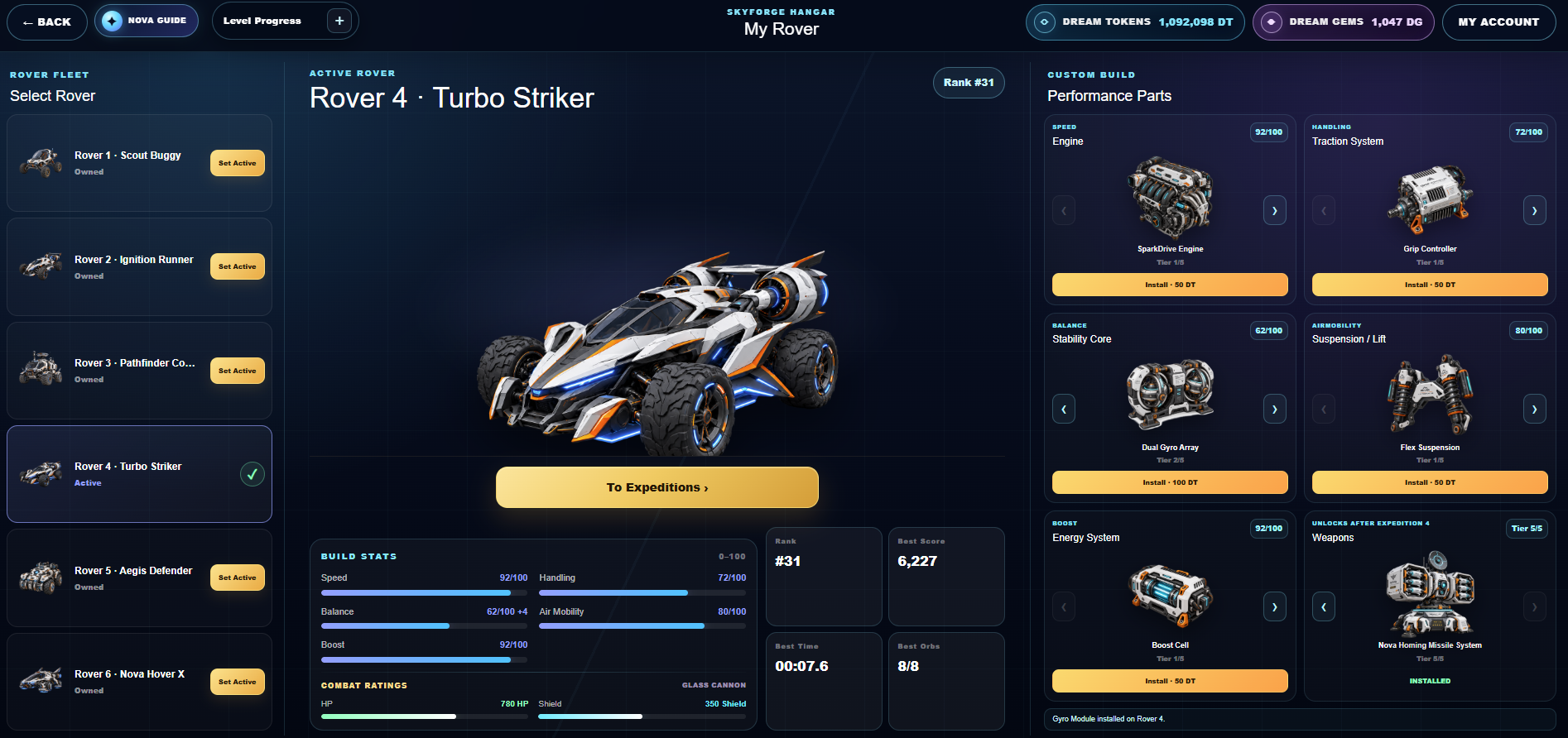
This is important because the same Token can have different possible uses. Spending on a rover upgrade means not using those Tokens somewhere else. Saving can delay one reward in order to reach another.
Why does Dreamscape use two currencies?
A single unlimited reward can lose meaning quickly. Separating an everyday currency from a more specialised reward gives Dreamscape more ways to create pacing and different kinds of goals.
DT can support frequent economic decisions. DG can mark selected completion milestones or unlocks where a rarer reward is more appropriate.
What changes when learners reach Milo?
In Nova, rewards often support progression, customisation and upgrades. Milo increasingly turns the same idea into financial decision-making. Learners can use Dream Tokens inside a fictional economy where choices about spending, assets and business have visible consequences.

This creates a progression from “I earned something” to “What should I do with what I earned?” The second question is where rewards begin to support financial literacy rather than simply motivation.
Why not reward every action heavily?
If every click creates a large reward, the currency stops representing meaningful progress. A useful virtual economy needs some scarcity. It also needs rewards that are understandable enough for a learner to make decisions about them.
Dreamscape therefore treats the economy as something to balance, not as an endless shower of points. The goal is for earned resources to remain relevant when the learner reaches a shop, an upgrade screen or a financial simulation.
What parents can ask about rewards
Rewards can become useful conversation starters. Instead of only asking how many Tokens a child has, try asking why they used them:
- What are you saving for?
- Why did you choose this upgrade first?
- Was this purchase worth giving up something else?
- Would you make the same choice again?
Those questions shift attention from collecting currency to making decisions.
Continue with Dreamscape
See what happens after learners earn
Explore Milo’s World to see how virtual rewards develop into spending, investing, ownership and business choices.
Continue Exploring