
Dreamscape Guide
A Guide to Nova’s World
Nova’s World is the academic and thinking side of Dreamscape One: a place where curriculum practice, reasoning challenges, rewards, customisation and longer-term progression are designed to reinforce one another.
Nova's World is designed primarily for primary-school learners. It is where Dreamscape places the strongest emphasis on academic foundations, thinking skills and the habit of returning to learning over time.
Parents will see several different locations inside Nova. They are not intended to do the same job. Some locations are directly about curriculum mastery. Others focus on memory or reasoning. Others give the learner a place to use the rewards they have earned.
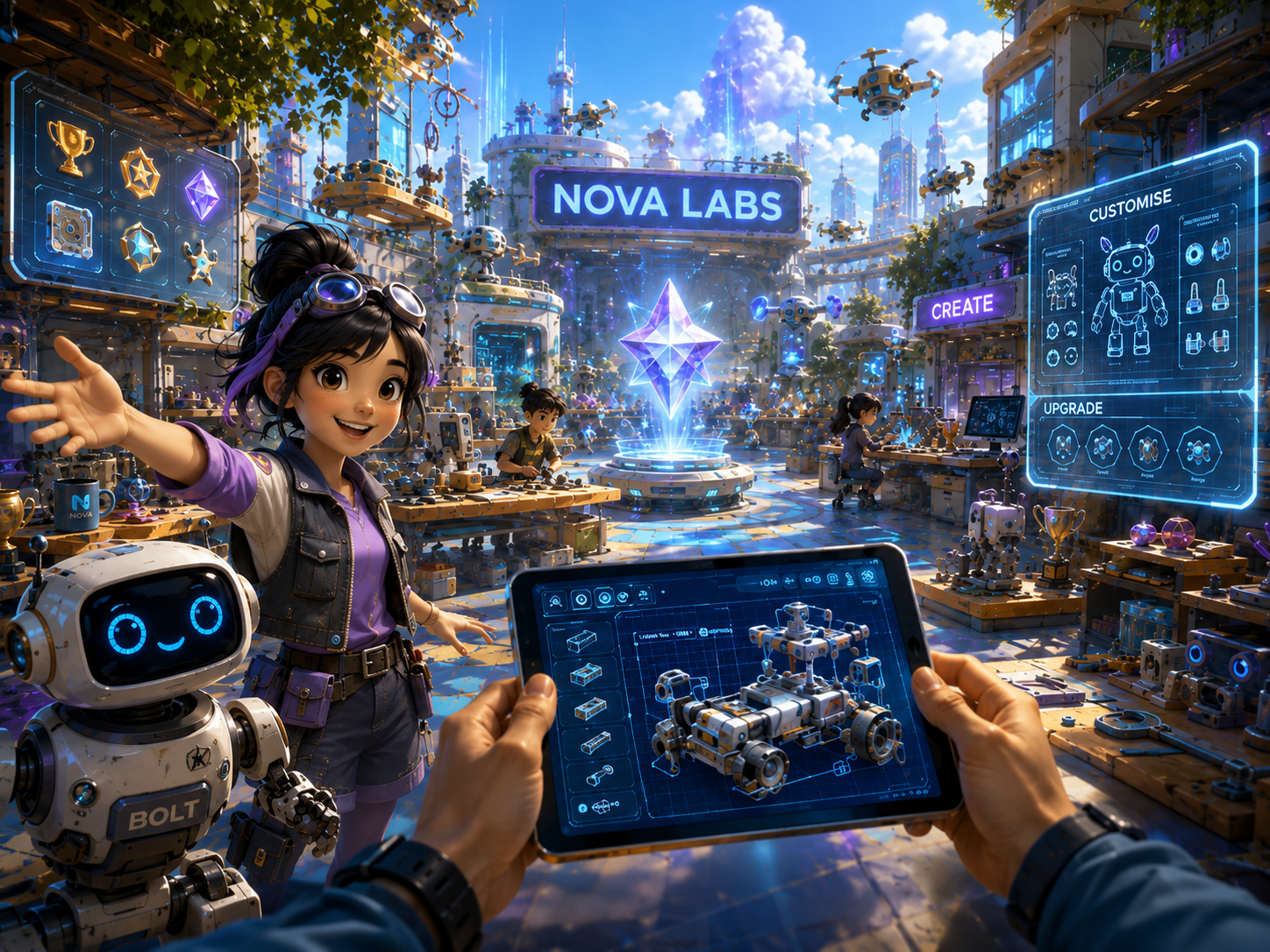
The Missions Centre: where curriculum learning begins
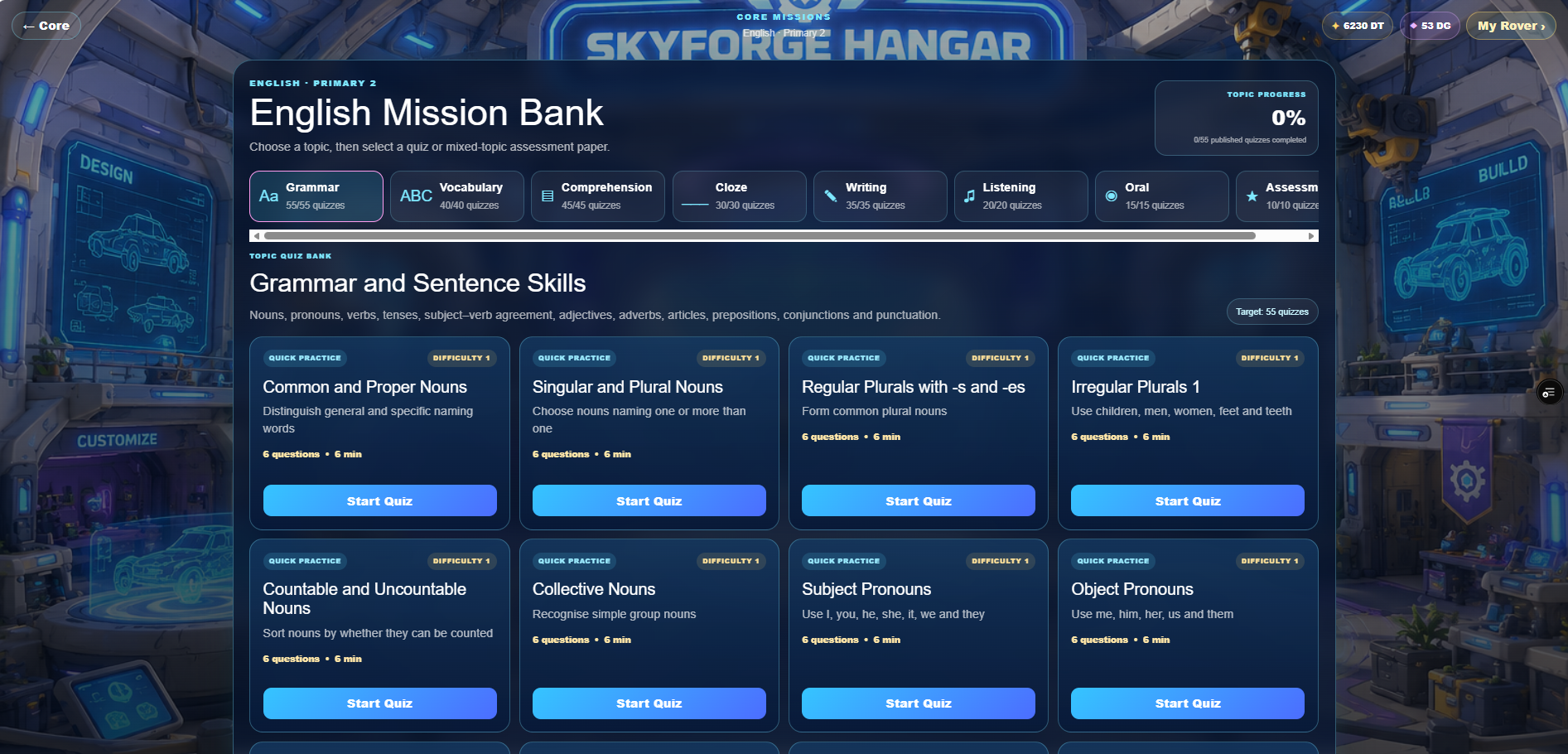
The Missions Centre is the academic anchor of Nova's World. It gives learners access to structured Learning Missions across the school curriculum, with English and Mathematics forming the core current experience and Science part of the wider Dreamscape curriculum system.
Learning Missions can include topic practice, mixed work and broader assessments. The goal is not simply to generate large numbers of questions. The questions need to reflect the concept being taught, become appropriately demanding, and provide enough evidence to show whether a learner is becoming more secure over time.
Think Lab: practise the skills around learning
Knowing a curriculum concept is only one part of learning. Children also need to hold information in mind, notice relationships, spot patterns and reason when the answer is not immediately obvious.
Think Lab is where Dreamscape can focus on these supporting abilities in their own right. Activities such as Colour Code, Sets and Tower Memory are designed to feel different from a subject quiz because their purpose is different. They ask the learner to pay attention, plan, remember and reason.
If every challenge looks like another worksheet, the learner never gets to experience thinking as a skill of its own. Think Lab creates a different context while still contributing to the wider Dreamscape journey.
Knowledge Arena: test what you know under pressure
Knowledge Arena turns question answering into a faster, more energetic challenge. Learners answer correctly to attack, protect their character and progress through a battle. In multiplayer modes they can cooperate or compete while still needing to produce correct answers.
The arena is not meant to replace careful teaching. Its value comes from retrieval, fluency and engagement. A learner who has already studied a topic gets another reason to recall and apply that knowledge in a different setting.
Nova’s Home: give progress a place to live
Nova's Home exists because rewards become more meaningful when the learner can use them to change something persistent. Instead of earning points that disappear into a total, learners can use Dream Tokens and eligible rewards to unlock spaces, furnish rooms, collect items and personalise the world.
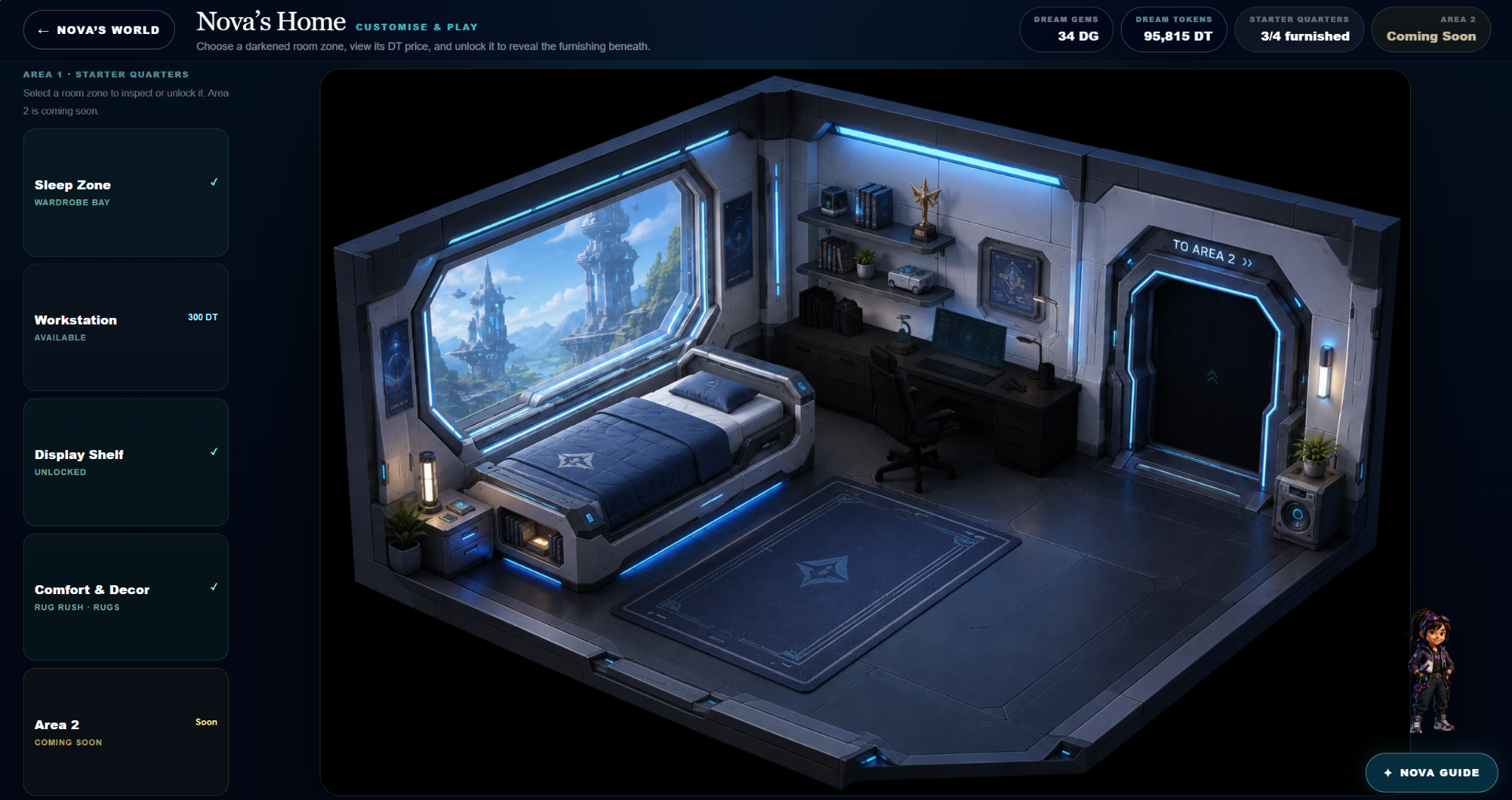
This is one of the most important differences between Dreamscape and a simple points system. The learner is not only told that they have made progress. They can see a world that is gradually becoming more theirs.
Skyforge Hangar: build, upgrade and test
Skyforge takes the idea of ownership further. Learners can unlock rover tiers, choose colourways, install performance upgrades and take the rover into Expeditions. Different rover profiles favour different strengths, so the choice is not simply about buying the most expensive item.
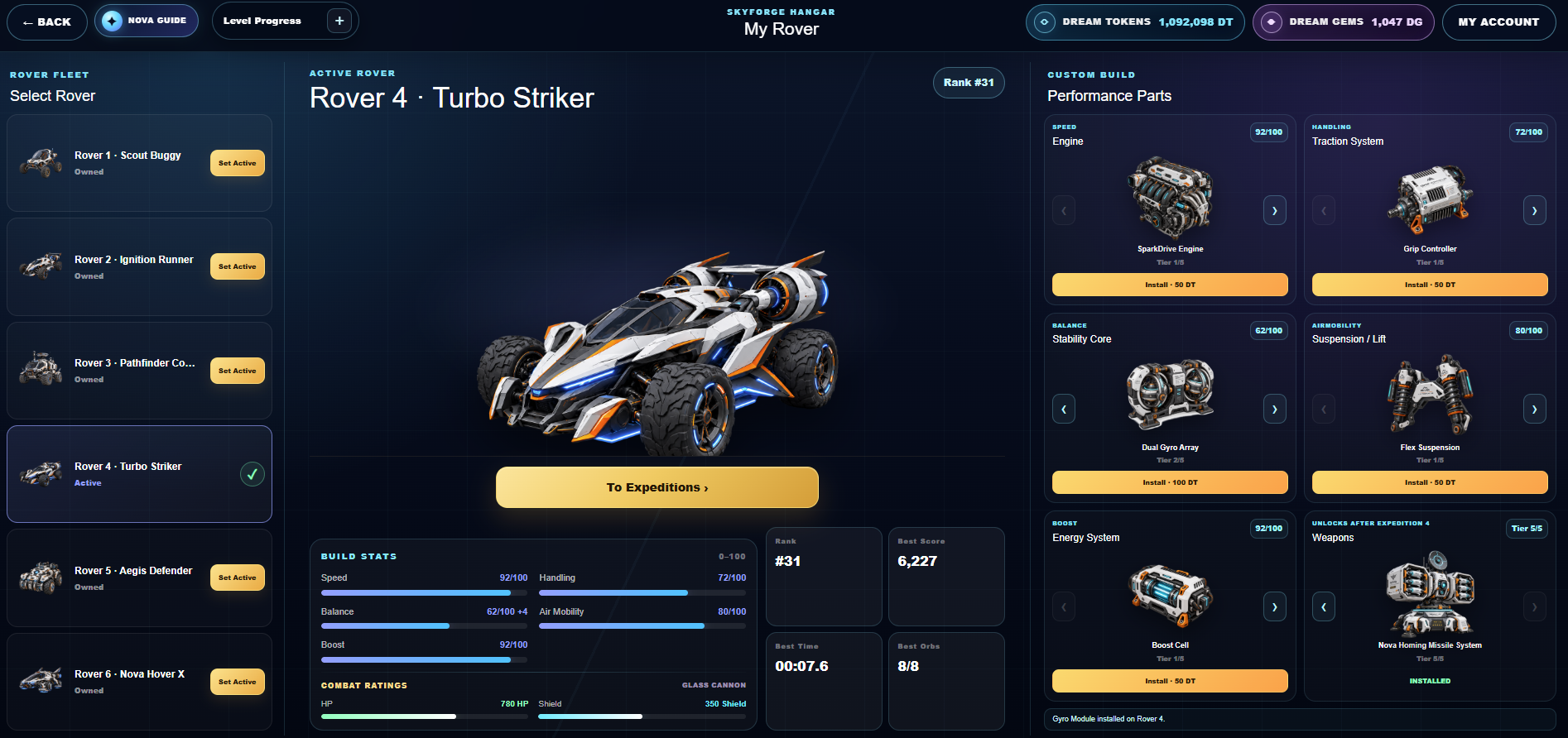
A learner may choose to spend Tokens immediately on an upgrade or save for a later rover tier. That creates a simple form of resource planning even before Milo's World introduces financial concepts more directly.
Dream Tokens and Dream Gems inside Nova
Dream Tokens (DT) are the everyday virtual currency used throughout Dreamscape. They can be earned through progress and used for upgrades, unlocks and purchases. Dream Gems (DG)are a more specialised reward linked to eligible learning activities.
The currencies have different purposes, but the key design principle is the same: learning should create visible progress that matters somewhere else in the ecosystem. Neither currency is cash, and the system is not designed to turn every answer into a financial transaction.
How the locations work together
A child might complete a Mathematics mission in the Missions Centre, spend a few minutes in Think Lab, then use earned Dream Tokens to improve a rover or customise Nova's Home. Another day, the learner may choose Knowledge Arena for a faster challenge before returning to curriculum work.
The sequence does not have to be identical every time. What matters is that the locations share progression. The learner's academic work is not isolated from the rest of the world.
Where NOVA+ fits for parents
Parents do not need to interpret every game screen to understand whether learning is happening. NOVA+ is designed to organise the academic evidence behind the experience into clearer views of progress, strengths, gaps and mastery.
This is particularly important because a learner can enjoy Nova's World while still having concepts that need attention. Engagement is useful, but it is not the same as mastery. NOVA+ helps keep those two ideas separate.
Who Nova’s World is designed for
Nova's World is built around the primary-school stage, roughly ages 6–12, but the more useful guide is academic readiness rather than a birthday alone. Learners can move through different subjects and challenges at different speeds.
As children become ready for more complex questions about money, ownership, risk and business, Milo's World begins to make more sense. The transition is meant to feel like the world growing with the learner, not a sudden replacement of one product with another.
To understand the parent intelligence layer behind Nova in more detail, continue with What Is NOVA+? A Parent's Guide.
Continue with Dreamscape
See Nova for yourself
Explore Nova’s World, or read how NOVA+ turns learning evidence into a clearer parent view.
Continue Exploring